


Hospitality software encompasses various tools, solutions, and systems specifically created for businesses in this sector. SaaS (Software as a Service)-based hospitality solutions, built and delivered via the cloud, specifically the SaaS cloud, are transforming the industry.
What is hospitality SaaS software?
In hospitality, SaaS applications are replacing traditional on-premises software installations by hosting the applications in the cloud, allowing users to access them online through a subscription model.
SaaS provides a unified platform where hotel staff can access all vital applications, including bookings, CRM, analytics, and marketing, thus allowing them to achieve greater efficiency and effectiveness by:
– Accessing data quickly: Easily and quickly accessing customer data.
– Real-time updates: Modifying settings and updating information in real-time.
– Customising services: Tailoring services to meet specific customer needs.
Read more: Why Everything You Know About SaaS Software Might Be Wrong
Use cases of SaaS in Hospitality
Much has been talked about regarding the benefits of SaaS in businesses regardless of size, so we will not bore you with the details. Nonetheless, you can check out all about SaaS in our other articles in the series:
Fundamentals of Cloud | Public v Private, SaaS v Hosted, Multitenancy
Tech Tidbits: What is Software-as-a-Service (SaaS)?
Zero Trust Architecture: A Non-Negotiable in SaaS Security?
Ready to Rebound: Accor Poised for Recovery with Infor SunSystems SaaS
But which areas in the hotel business can benefit from SaaS solutions? With more than 30 years in software implementation, the majority of our clients are in this robust and dynamic industry. Therefore, we have seen a fair share of how advanced technologies, not just SaaS, can greatly transform operations and boost productivity of more than two handfuls of departments and functions within the business.
Today, SaaS-based solutions allow hoteliers and their teams to access their pool of data, monitor performance, adjust pricing, approve budgets, process customer feedback, and more via any device. They are no longer bound to one workstation or reliant on an isolated, locally installed software instance populated with potentially stale data. Today, decisions can be made quickly, accurately, and most importantly, more timely, allowing for proactive adjustments rather than reactive corrections.
Read more:Solving the 4 Core Financial Management Challenges in Hospitality
This pervasive utility stretches from the guest-facing services, such as the concierge and front office, to the vital back-of-house operations like finance and accounting. It covers logistical functions, including housekeeping and maintenance, and extends to the sophisticated, analytical domains of revenue management and distribution.
Furthermore, its influence is deeply felt in operational support areas like procurement and inventory management, as well as crucial customer-facing roles like sales and marketing. Fundamentally, the simple yet profound truth is this: SaaS is present and provides value wherever the operational or strategic data lands, aggregates, or needs to be acted upon.
Don’t take our word for it. Here is what Eric Wong, VP, Hospitality – Asia Pacific from Infor, has to say about what the advanced capabilities of an integrated SaaS-based Hospitality solution can do.
Does this mean on-premises solutions are becoming obsolete? Certainly not! On-prem software still brings tons of value to hospitality and non-hospitality businesses, but the widespread adoption of SaaS is undeniable and once again emphasises that it is not a passing trend.
Why SaaS is shaping the presence and future of hospitality
The global SaaS market [1] is projected to reach approximately $1,016.44 billion by 2032, a threefold increase from $358.33 billion in 2024. Moreover, SaaS software for the Hospitality industry is also experiencing significant growth, with an estimated increase from $24.2 billion in 2024 to $75.3 billion by 2030 [2]. This reflects a real demand for SaaS in Hospitality as more and more businesses are realising the integral role of these solutions for their digital transformation journey.
We have also covered various instances of how SaaS can be implemented or migrated from legacy software at length. For instance, check this out: Moving from Legacy to Cloud Financial Management Software? Here’s Your Plan.
Let’s go back to our question above: why do many experts see SaaS as the tool that helps shape the presence and future of Hospitality? It comes down to its scalability and integration capabilities.
Scalability
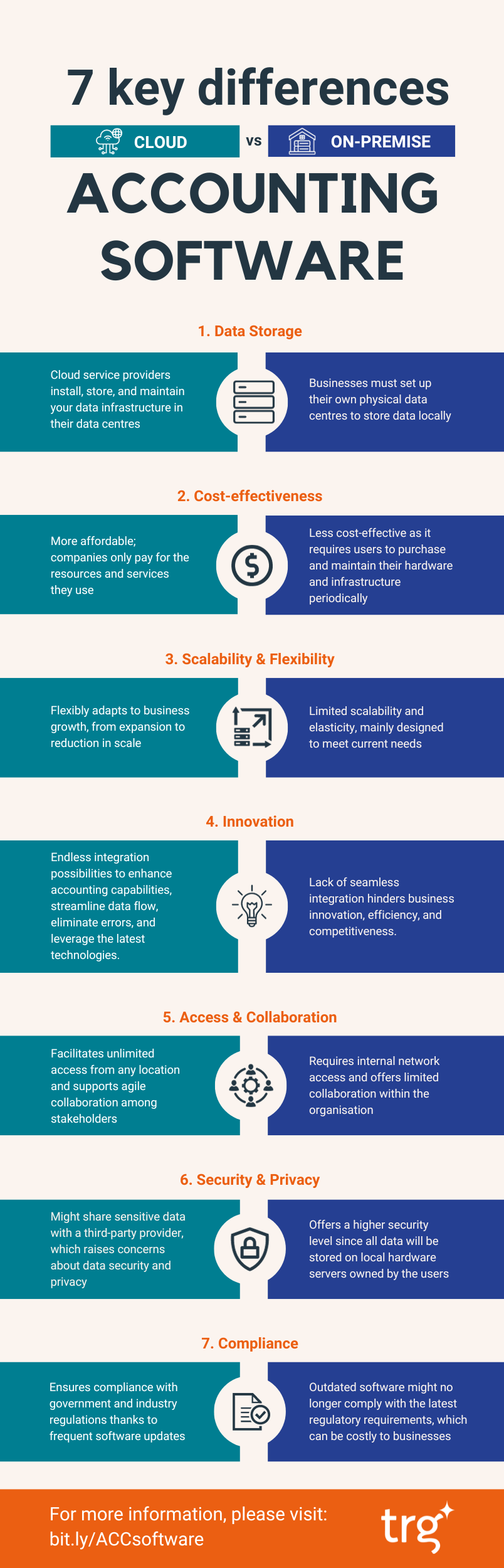
SaaS solutions enable hospitality businesses to quickly adjust operations, scaling up or down computing resources in response to shifting demand or seasonal fluctuations. This flexibility allows them to seize opportunities while mitigating risks like overbooking losses.
A major advantage of SaaS-based solutions is the automatic, periodic updates they receive, including security patches and feature enhancements. These updates happen seamlessly to avoid risks of downtime or disruptions while ensuring organisations always have the latest functional and secure version.
For instance, vendors are proactively addressing upcoming regulatory changes, such as the twelfth version of the Uniform System of Accounts for the Lodging Industry (USALI 12). This immediate responsiveness ensures continuous compliance for their clients. This dedication to regulatory foresight is a core value proposition of modern hospitality SaaS.
Integration
Running a hotel without properly integrated software is like attempting to solve a massive puzzle with no instructions. What will this leave you? Sure thing that you will eventually figure out how to put the puzzle together, but the process will not be quick.
Or perhaps, this might sound more familiar: one system reports an order as “pending” while another calls it “completed”. That is conflicting records and version control nightmares in plain sight.
SaaS integration is the solution. It is the process of connecting separate cloud-based platforms so they can share data and work together seamlessly, creating a cohesive hotel ecosystem. Instead of the tedious and error-prone task of manually transferring data between applications, integration automates this process. Hoteliers maintain control, deciding what data is transferred, when the transfer occurs, and what actions are triggered in response.
Integration makes everything click into place. When data is updated in one system, the change automatically propagates everywhere. Let’s not forget about AI, the newly discovered “spice” of the tech world that makes the business IT ecosystem “taste umami”.
Integrated AI significantly enhances decision-making. AI-driven workflows provide data-driven insights and predictive analytics, spotting patterns and suggesting the next steps before the need for a decision is even apparent.
Finally, while manually managing customer data might be feasible with 20 guests, trying it with 2,000 will make you wish for a quieter job. SaaS integration creates scalable processes that can handle increasing volumes of work without requiring you to hire an army of administrators.
What’s next for Hospitality SaaS?
We believe the SaaS landscape will continue to evolve, marked by a deeper integration of cutting-edge and emerging technologies, fundamentally aimed at streamlining operations and enhancing the daily lives of both individuals and businesses. Yes, your dream of having a Hospitality-specific AI agent is coming true.
Emerging technologies are expected to power the hotel’s IT backbone, namely dynamic pricing, predictive maintenance, personalised guest experience management, and highly efficient labour optimisation.
Artificial Intelligence (AI) and machine learning
The integration of AI and machine learning into SaaS for hotel guest applications is poised to transform the guest experience. This evolution is driven by AI-powered chatbots and virtual concierge services, which deliver immediate and personalised responses to guest questions, significantly boosting communication and engagement. Furthermore, machine learning algorithms are key to this process, as they analyse and learn from guest interactions to consistently provide more customised recommendations and services.
Predictive analytics
SaaS-powered predictive analytics will be crucial for anticipating and meeting guest needs. By analysing historical data and real-time insights, these solutions can forecast guest behaviour, allowing hotels to proactively customise their services. This capability to predict preferences—such as room type, dining choices, or activities—will significantly enhance the personalisation of the guest experience.
What does the expert say? Here is Sammi Wu’s (Director of Sales – Hospitality, Southeast Asia region, Infor) take on these emerging technologies.
“Traditionally, if you want to run a report, especially for a group, you probably have to do your own manual consolidation, select the parameters, and do some trial and error to really have the report set exactly to your needs.
With our brand new HAI, we have the bot called “Rover”. Similar to how you question ChatGPT, you can throw a question like, “Hey, Rover! Give me a revenue report of this year; break it down by, let’s say, market segment and rank it by travel agents”.
This is just one of the examples of how the new technology is really helping and simplifying how you run your daily operations, especially from a group perspective, and how it helps you to do consolidation and data analytics. If you want to take things to the next level, some sort of intelligence level, analytics, we can also leverage the Infor Data Lake technology. So we’ll be able to actually export all the data to the Data Lake. You can then, from there, pick up all the data to your own BI tool if, from the group, you have something that you are using at the moment.”
The above is the transcript from Sammi’s recent webinar with TRG on the topic of “Reimagining Hospitality: How Technology is Shaping Guest Experience and Business Growth”. The webinar is now available to watch on demand. Don’t miss Sammi’s insights! Check it out here!
Besides technology adoption, a parallel and equally urgent concern for modern hospitality businesses is the imperative for sustainability. This concern has been formalised and amplified by the release of the USALI 12, which features a dedicated section for Energy, Water, and Waste metrics (Schedule 9). This explicit inclusion in a foundational accounting standard underscores the much-needed actions and the increased pressure on the sector to act accordingly.
In response to this growing industry-wide emphasis on environmental accountability, SaaS solutions can potentially become indispensable tools for sustainability management. These platforms are not merely integrating existing data but are being designed to actively align with and drive sustainable practices:
– Advanced algorithms can identify inefficiencies, predict peak usage times, and automate controls to reduce waste
– Track and categorise waste to provide granular data, crucial for developing targeted strategies, optimising inventory, and complying with stricter regulations
Moreover, a guest-facing app, whether it is a property management system or a customer relationship management tool, can be leveraged to provide actionable eco-friendly recommendations. For instance, prompting housekeeping to use less water-intensive cleaning methods or offering guests opt-in programs for linen reuse or digital check-in/check-out.
Long story short, the right solution can help hospitality businesses weather any storm. If we have not made it clear what that solution is, no worries! Maybe you have a unique challenge we have not considered, and we would love to hear about it. So, whether you’re ready to take action or simply want to share your concerns or pain points, we’re just a few clicks away!